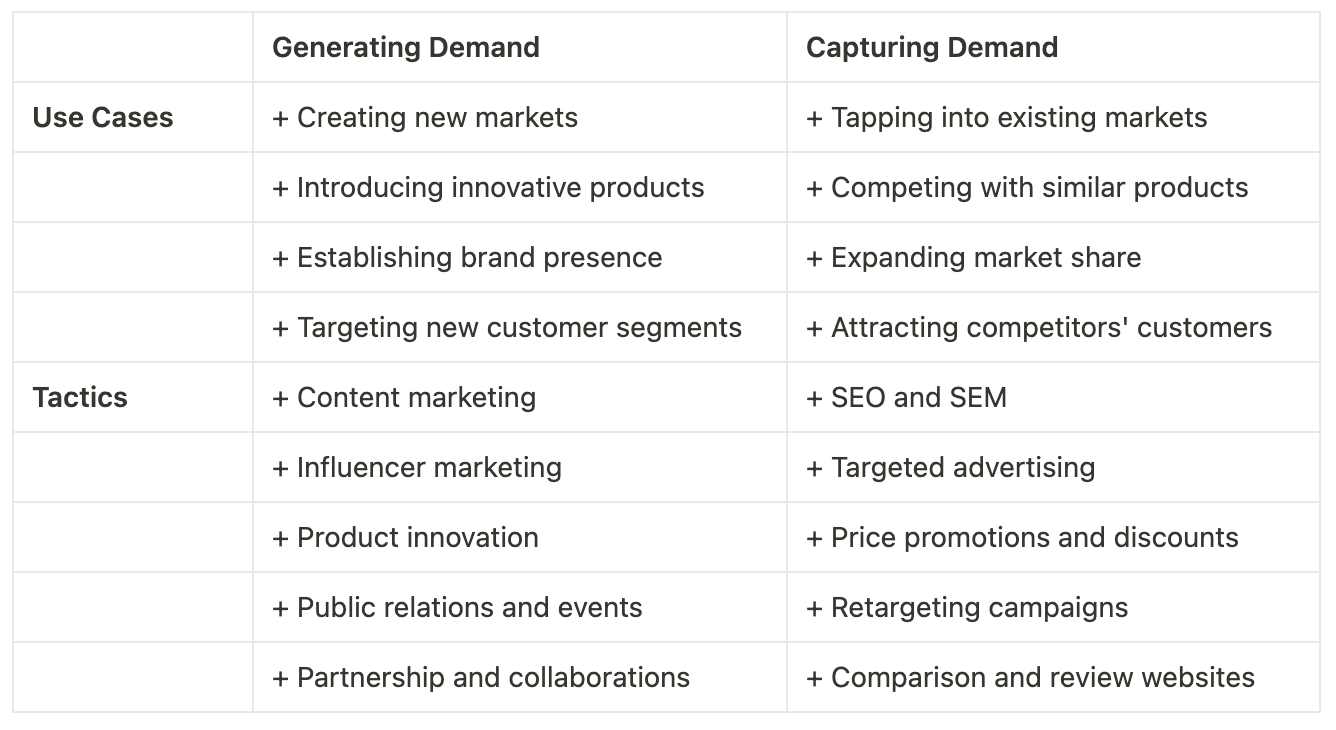
Demand Generation vs Capturing
A brief playbook on working with demand
What is demand capture
Demand capture is about attracting people who want to fulfill their desire. When many people want something, they manifest their desire by searching the info about it. They go out on Google and type something like “how to send big files”.
The more people search for the same keyword, the more demand there is. Search queries show a model of potential demand
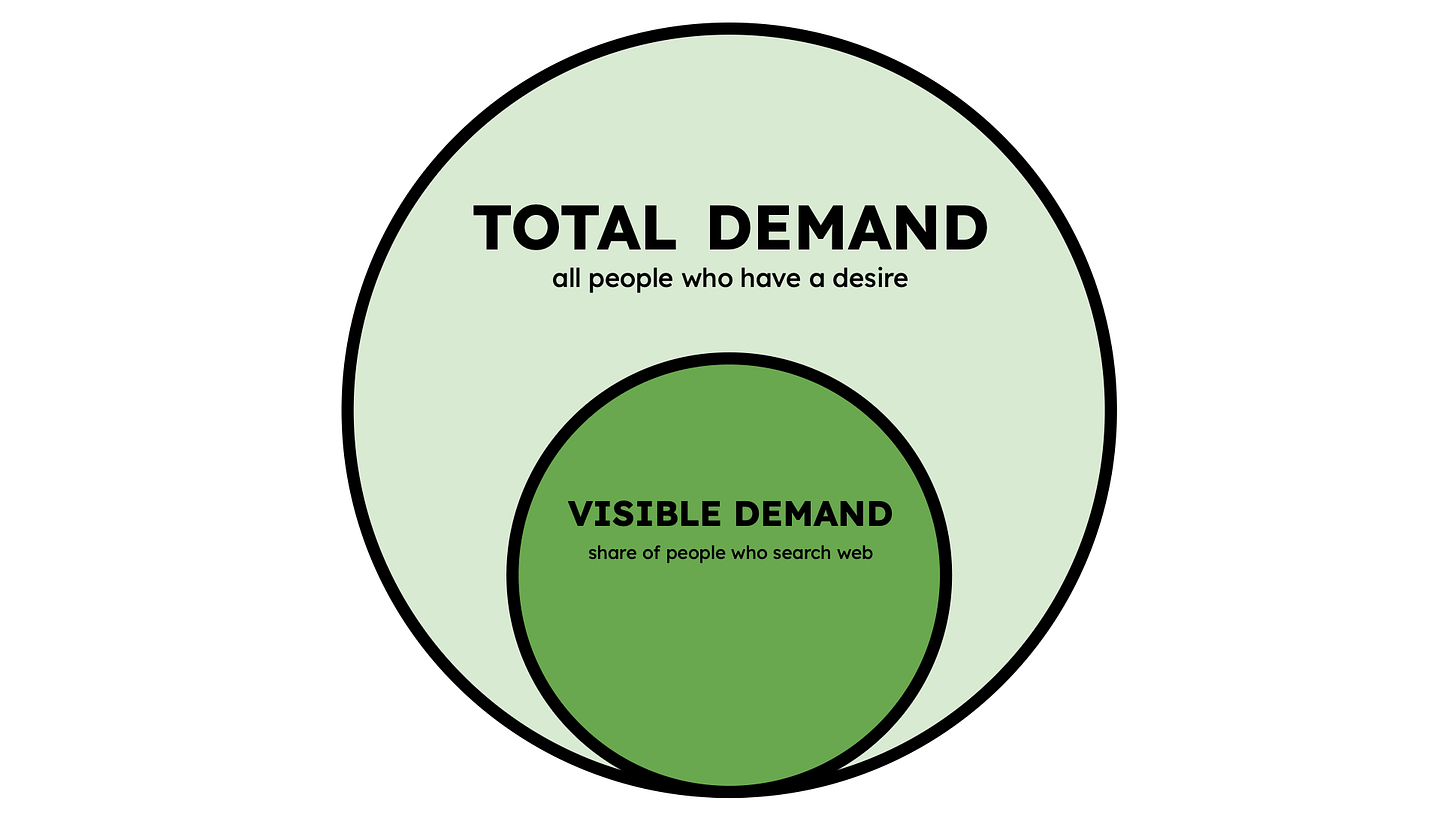
To capture demand, you have to get noticed by people who search for something.
Typical examples are
taxi drivers at the airport entrance
websites on Google
restaurants near tourist attractions
Capturing demand is easier than generating it. The desire has already been formed, and you only have to address the people with clear intent.
How to capture demand
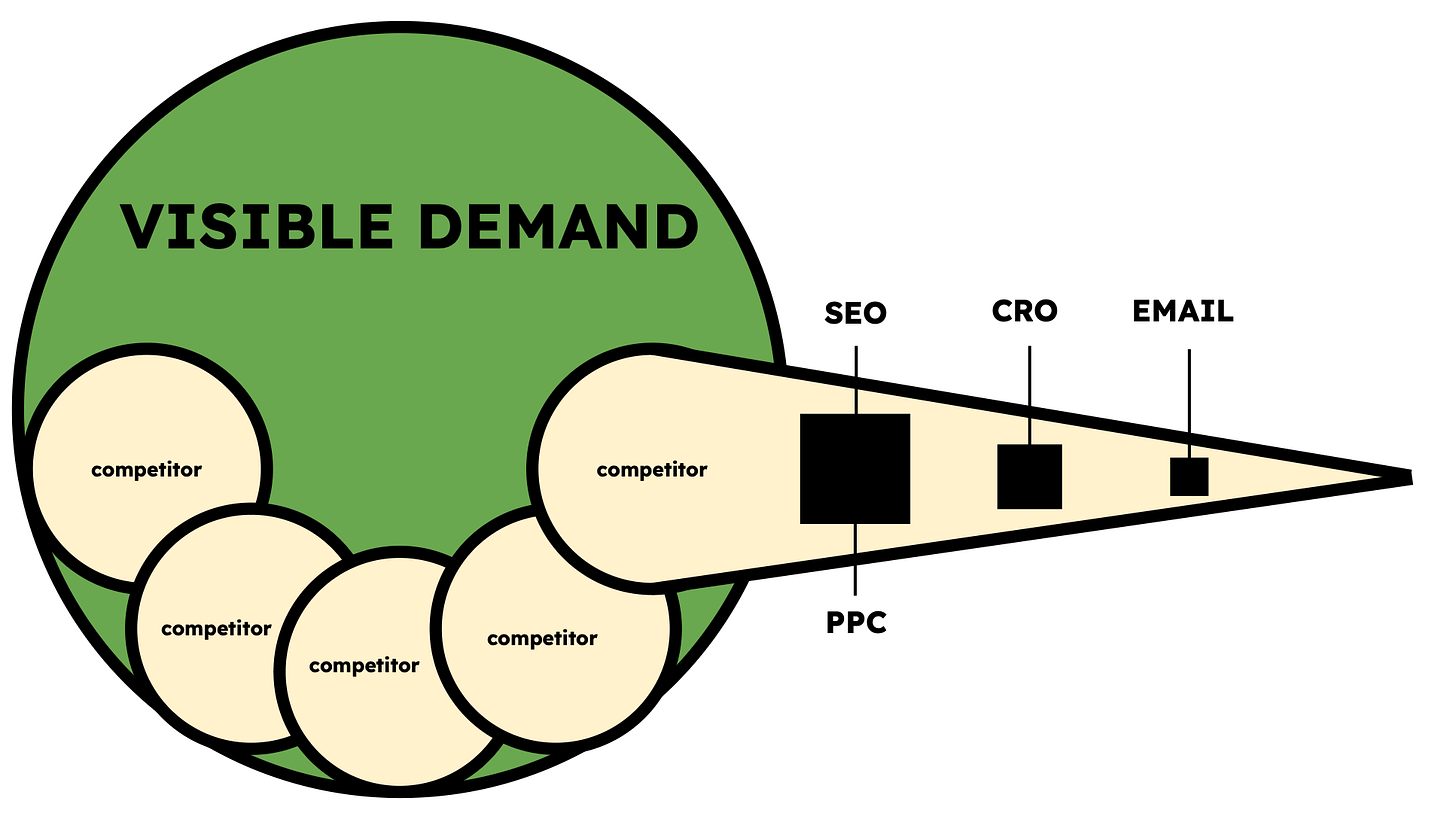
The easiest way to capture demand is to identify the top desires and channels. Then, you need to pick the right user acquisition tactics.
Consider an example of a financial app for business. To identify the top desires, you have to research keywords in search queries on Google.
You’d find things like:
Financial cloud software
How to manage EBITDA reports
How to calculate P&L
The next step is to sort these keywords by volume and go from there. To attract people who search for these solutions, you need to create a web page that successfully addresses the intent of the query.
There are at least 2 tactics you could use on search queries:
Search Engine Optimization
Pay Per Click campaigns
From there, it’s all about conversion rate optimization. The mechanic of how you turn attracted people into your customers.
What is demand generation
Demand generation is about making people aware of a problem or a solution. This task is harder than capturing demand. Instead of monetizing on existing interest, you have to unearth desires from the consumer’s subconsciousness.
There’s even an old adage about this – the consumers don’t know what they want.
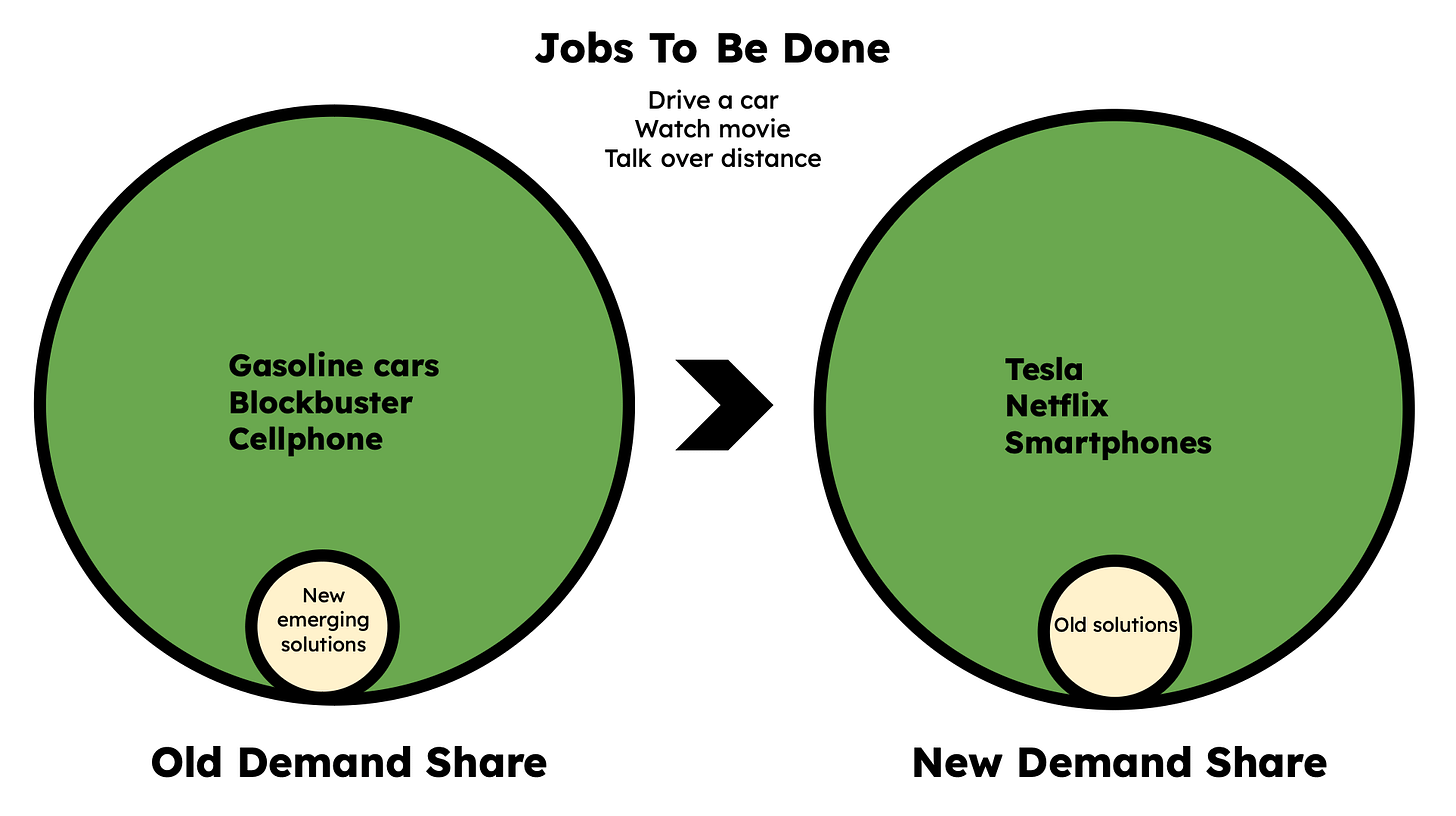
So where do you start then? I think it all comes down to the Jobs To Be Done framework. If you’re not creating an entirely new market, you disrupt an existing one with an innovative solution. Essentially, you’re capturing demand for existing solution and driving the demand for a new solution.
For example:
Tesla tapped into a demand for driving cars. They offered an innovative solution that pitched to a different audience. Tesla took a share of “buy a car” queries and turned them into “buy an electric car”.
Netflix tapped into a demand for renting a movie. By offering a cloud movie library, they started generating demand for a specific solution. From “rent a movie” to “best streaming services”.
Apple tapped into a demand for communicating over a distance. They offered an innovative way of communication: simple web browsing and social apps. From “buy a phone” to “buy a smartphone”
How to generate demand
First things off, think about what are you generating demand for. Is it for pain awareness or for your company's services? This depends on the novelty and saturation of your market.
If you offer a new solution approach, you can publish content about the approach itself:
blog articles
videos
social posts
If you’re not exactly in a blue ocean and the competition is high, you can re-invent the approach – call it a different name and promote it! HubSpot excelled in this strategy when they came up with “inbound marketing”.
Market leaders are defined by their ability to grow the demand for the whole market (TAM), not just their company.
If you understand this, the rest is straightforward:
Research consumer language they use to articulate their pains
Publish content assets with a clear value proposition
Optimize reader acquisition with marketing tactics
Now, if you need to drive demand specifically for your company, that’s a story of its own – brand awareness. Ultimately, it’s about showing content with a simple and precise message – [company name] – [UVP]. On top of that, it’s about building a media outlet inside your company.
Demand: Generating VS Capturing