How to decide between website blog and Medium for a crypto company
Is this really a decision or should they work in tandem?
Website blog vs Medium
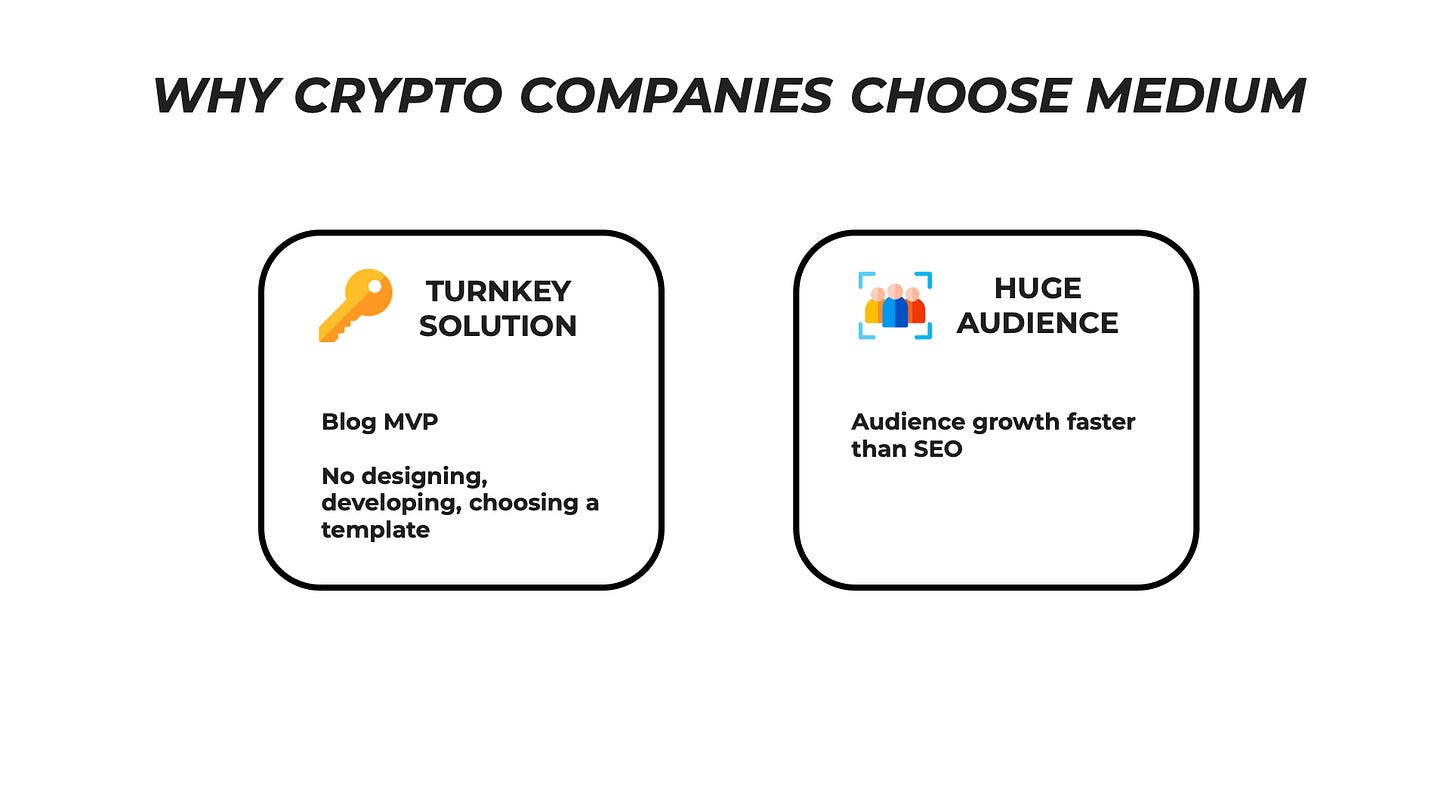
Coming from crypto companies has made me aware of how many projects publish their blog content on Medium. From the SEO perspective, it’s weird! Instead of boosting their domain authority and building that organic traffic growth, they do it for Medium.
There are two explanations for this:
Medium is a turnkey solution. There is no need to design and develop or choose a WordPress template. It's like a minimum viable product approach to blogging.
Medium has a huge crypto audience. You can gain more relevant followers faster than you would through a website blog.
Medium – a distribution channel like anything else
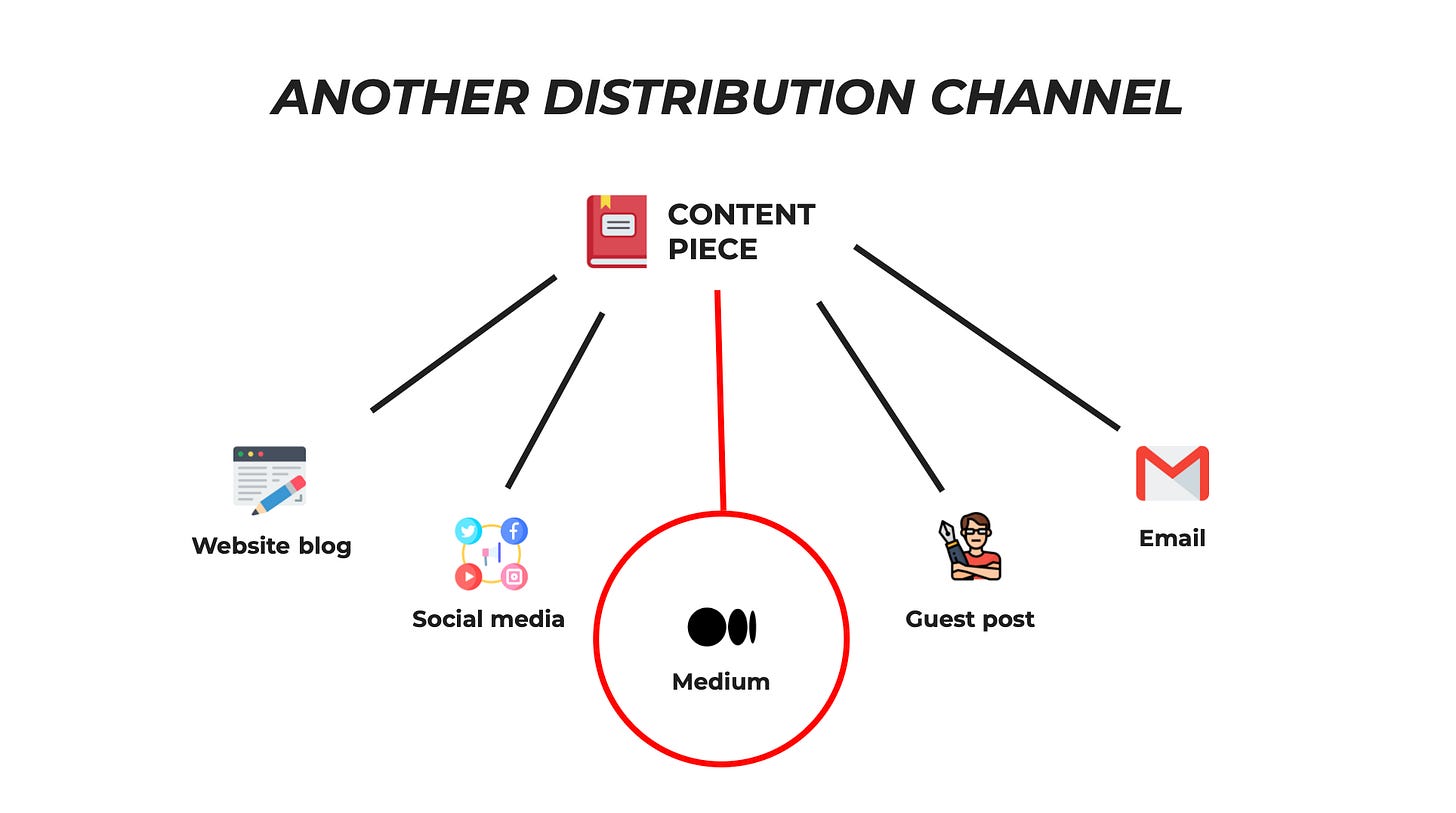
In content marketing, you first produce content and then distribute it. For example, when you create an article, it gets distributed to your blog and social media. With Medium, it feels exactly like a blog. So where do you publish it? On both platforms!
It shouldn’t be a decision, just like when you don’t decide whether the article gets published on a blog or social media. The key here is to adapt your content to the channel.
For example, your blog houses the full articles, whereas social posts either provide teaser links or fully adapted content.
How to publish crypto content on Medium
Think about which funnel would give you more results:
Medium audience > your Medium article > blog traffic
Medium audience > your Medium article > new follower > homepage traffic
Each funnel would correspond to the strategy you’d pick.
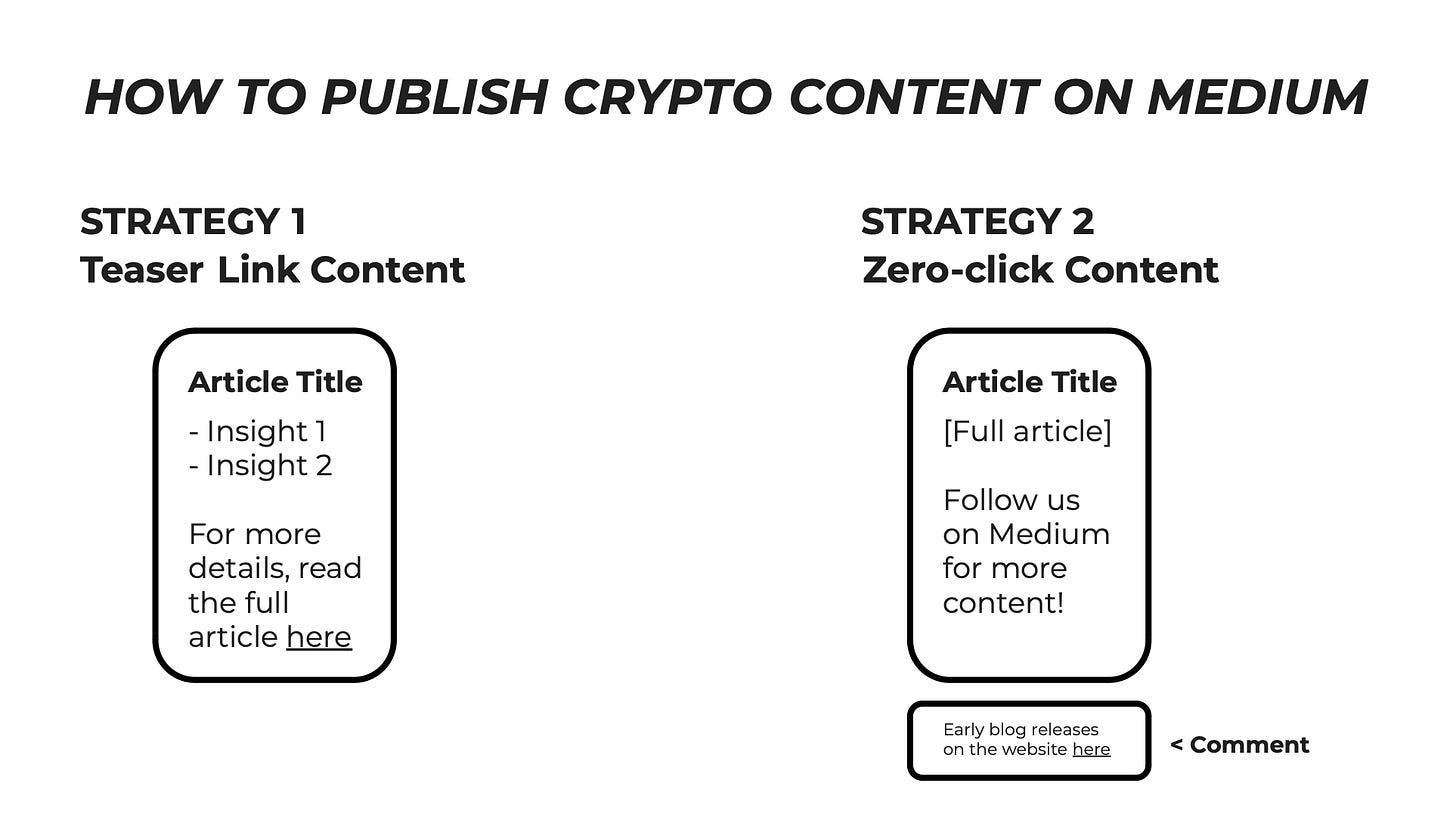
Strategy 1: Teaser link content
The goal here is to redirect your Medium impressions into referral traffic to your website blog:
Rewrite the article into a shorter version with key insights
Link to your website blog article with a CTA like “for more details, read the full article”
The downside to this would be churning out Medium article views. The current social media algorithms are known to prioritize content without links.
Strategy 2: Zero-click content
The goal here is to maximize impressions and gain more Medium followers:
Publish the article as is, closing with a CTA to follow your Medium
In the comment section, link to your website blog
The downside to this would be prioritizing Medium account growth over website blog traffic. However, who’s to say your new followers won’t check out the blog link in the profile? Or better yet – when they check out the comments and see that link too?
But what about content duplication?
A website’s search ranking gets penalized if it publishes duplicated content. When you publish the same article on Medium, it’s supposed to penalize Medium.com, not your domain. You’d be interested in getting organic traffic for your website blog, not a Medium profile.
That’s why you can use canonical tags for Medium articles. Medium doesn’t get penalized for your duplicate content. And you drive search traffic to your domain.
However, there might be one unexplored side of duplicated content and canonical tags. Content aggregators like Medium are incentivized to promote exclusive content. Both inside the algorithmic public feed and outside on search engines.
Therefore, it’s likely that Medium articles with canonical tags may not be picked up by the Medium algorithm. In this case, you have to recycle your article in a way that would optimize it for the Medium algorithm. For example, rewriting the content and removing your canonical tag. Consider this your SEO diversification as both versions would be ranked on a search engine.
How to test the strategies
Identify your top 5 performing articles
Publish them on Medium during a month using one strategy first
Measure the results and delete the articles
Publish them on Medium during a month again but use another strategy
Measure the results and compare them with previous numbers
Look, I’m just a crypto startup so…
Okay! If you’re only starting out on your content marketing, publish your articles on Medium. Set up the publication flow for Medium and then work on the website blog. Once your blog is ready, move your Medium articles to the blog and rewrite them for Medium.