How to use microproducts as your marketing assets
Learn how to extend your funnel and get more leads using small DIY solutions for your persona
Defining a Microproduct
What is a Microproduct

Microproduct is a small solution that solves a tiny pain of your persona. Say a business owner is looking for a marketing agency. In this case, a relevant microproduct would be:
a spreadsheet template with marketing budget or activities planning
audit of current marketing setup
Microproducts display attributes like:
Thanks for reading Marketing Conversations! Subscribe for free to receive new posts and support my work.
Limited by features or usage capacity
Meant as a product entry for upselling the main solution
Either free or costs no more than 5% of your main product
A Test Drive for Purchasing Experience
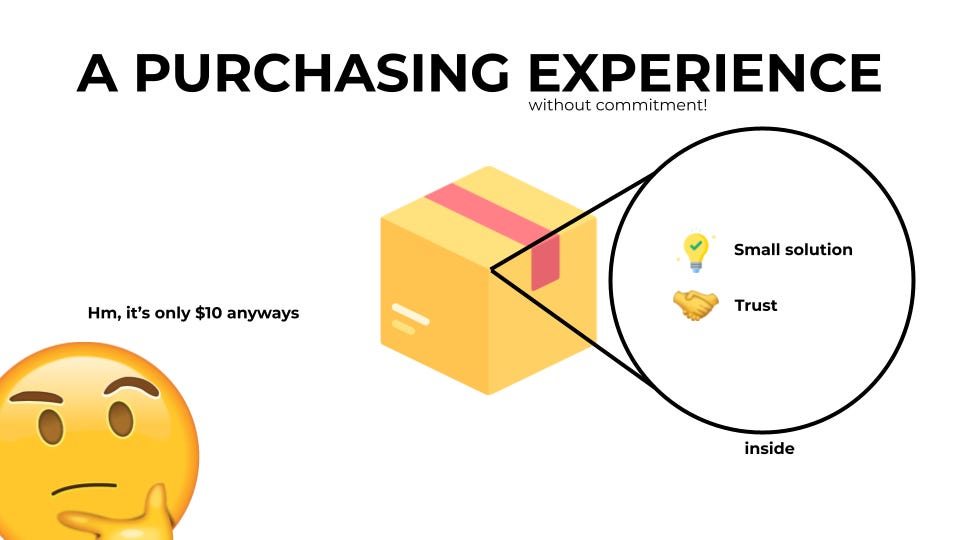
Microproducts solve 2 goals:
They capture a pool of your potential personas
They provide a purchasing experience as a benchmark for upselling
Let’s focus on the second point. It’s harder to decide on the big purchase because its consequences are too uncertain. What if the product/service sucks? What If I will regret this purchase?
Selling a microproduct builds trust with your brand. You’d basically have your persona experience the consequences of a purchase. This is sort of a safe space for customers as it reinforces feelings of satisfaction rather than regret. This experience assures your persona that buying a more expensive product would produce the same results and feelings if not more.
Product experience is a hallmark of PLG tactics. Instead of promising practical consequences in marketing assets, PLG products offer to experience the value firsthand. The positive experience then leads to a paid plan conversion. In this sense, the trial is a microproduct for SaaS.
Should Microproducts be Free?
Free microproducts typically come in a form of a content upgrade:
PDF guide download
Spreadsheet template
Checklist
This is a common practice for marketing-led products. When you produce free but gated content to convert inbound leads.
Paid microproducts are unbundled features or solutions:
A 5-day lecture session for education courses
Audits for service agencies
Note that although SaaS trials are free, they are more of an unbundled feature.
You’d think that microproducts need to be free for a better conversion into users. But free use is not associated with a purchasing experience.
In this case, it makes more sense to keep the free microproducts at the top of your funnel. Once exchanged for an email, you can proceed to sell a paid microproduct or a trial.
Microproduct Examples
Website Scanners
Semrush has a free SEO audit for websites.
The full product provides a toolkit for SEO marketers.

Ahrefs offers a suite of free products in exchange for emails:

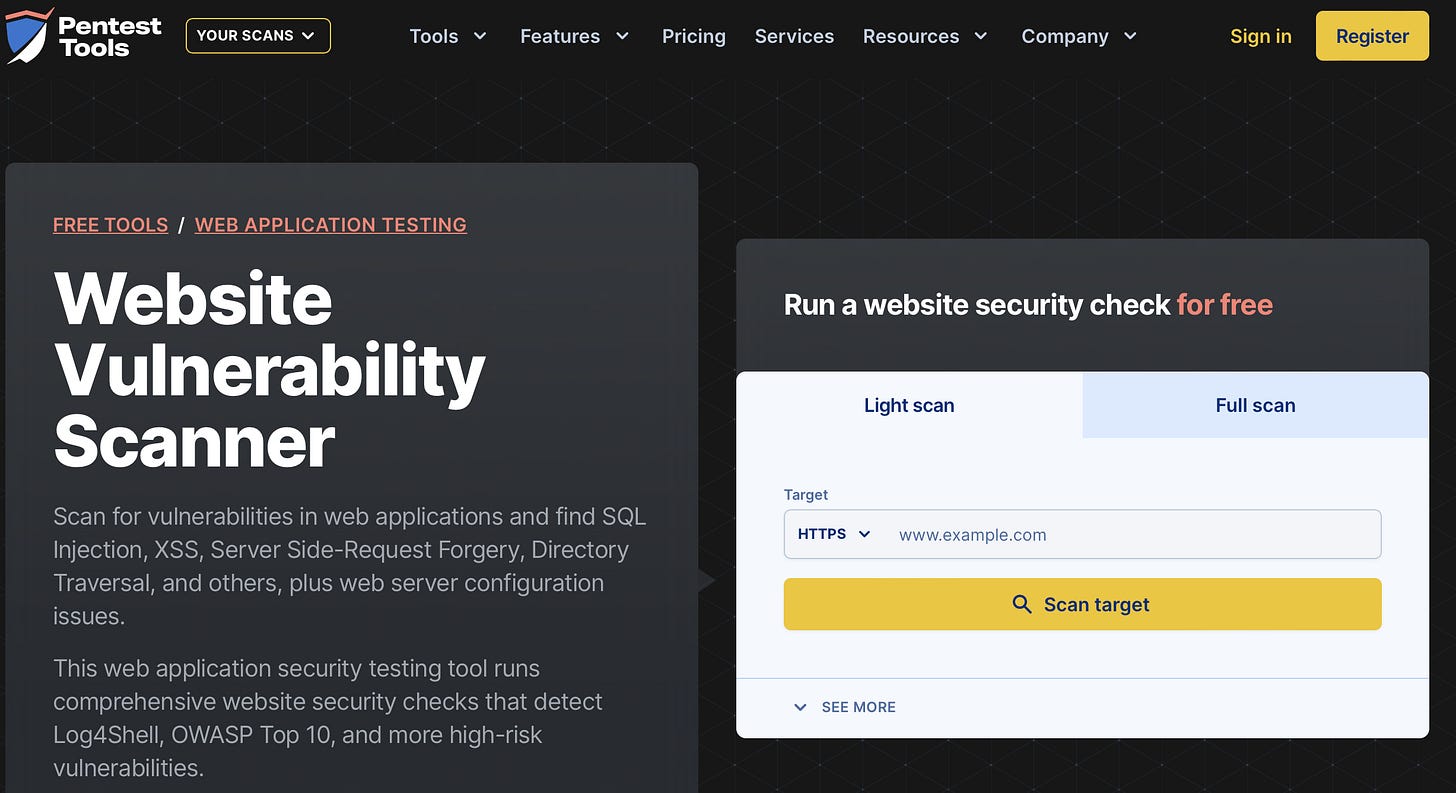
Pentest tools scans websites for common vulnerabilities:
Content Upgrades
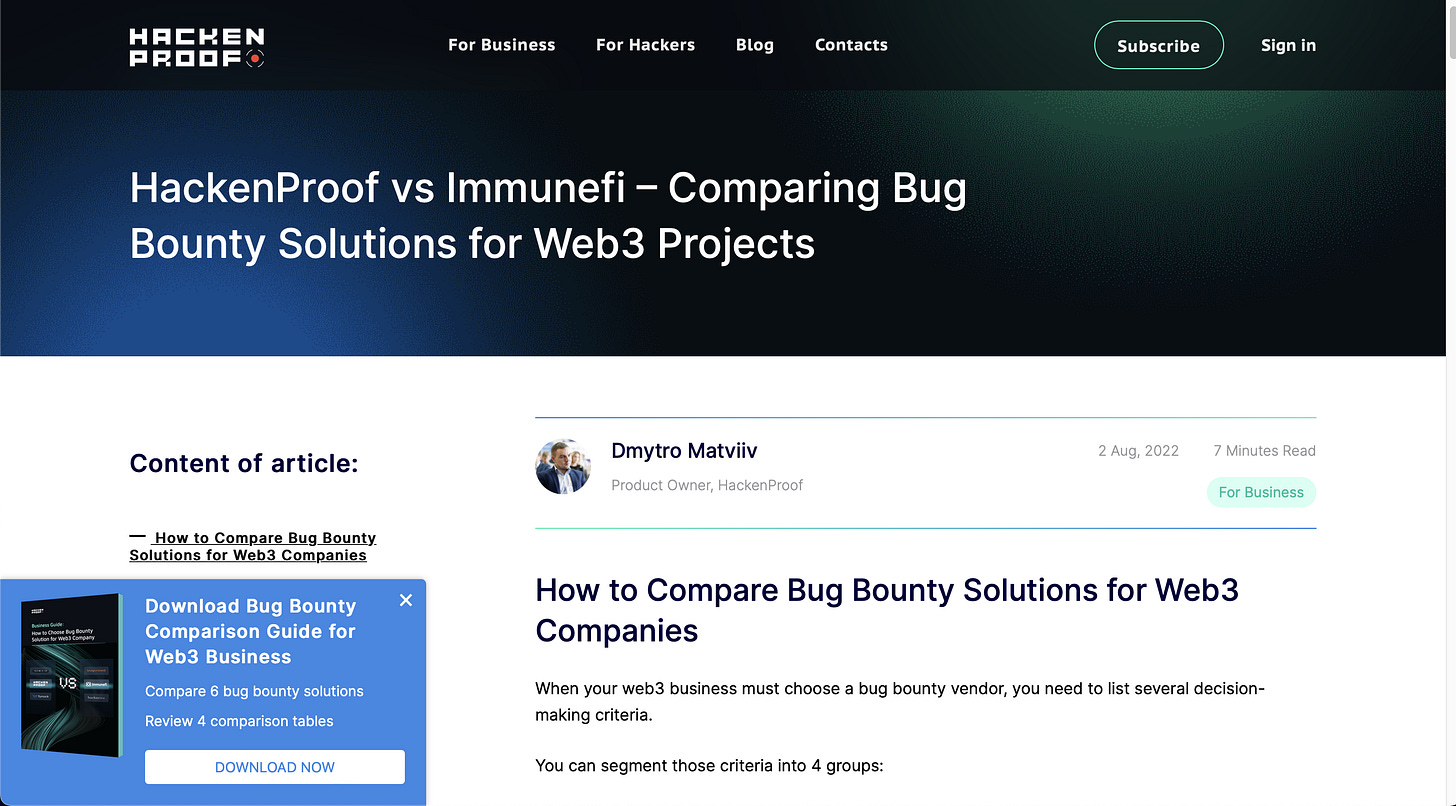
HackenProof offers a full guide on an article that’s part of the guide:
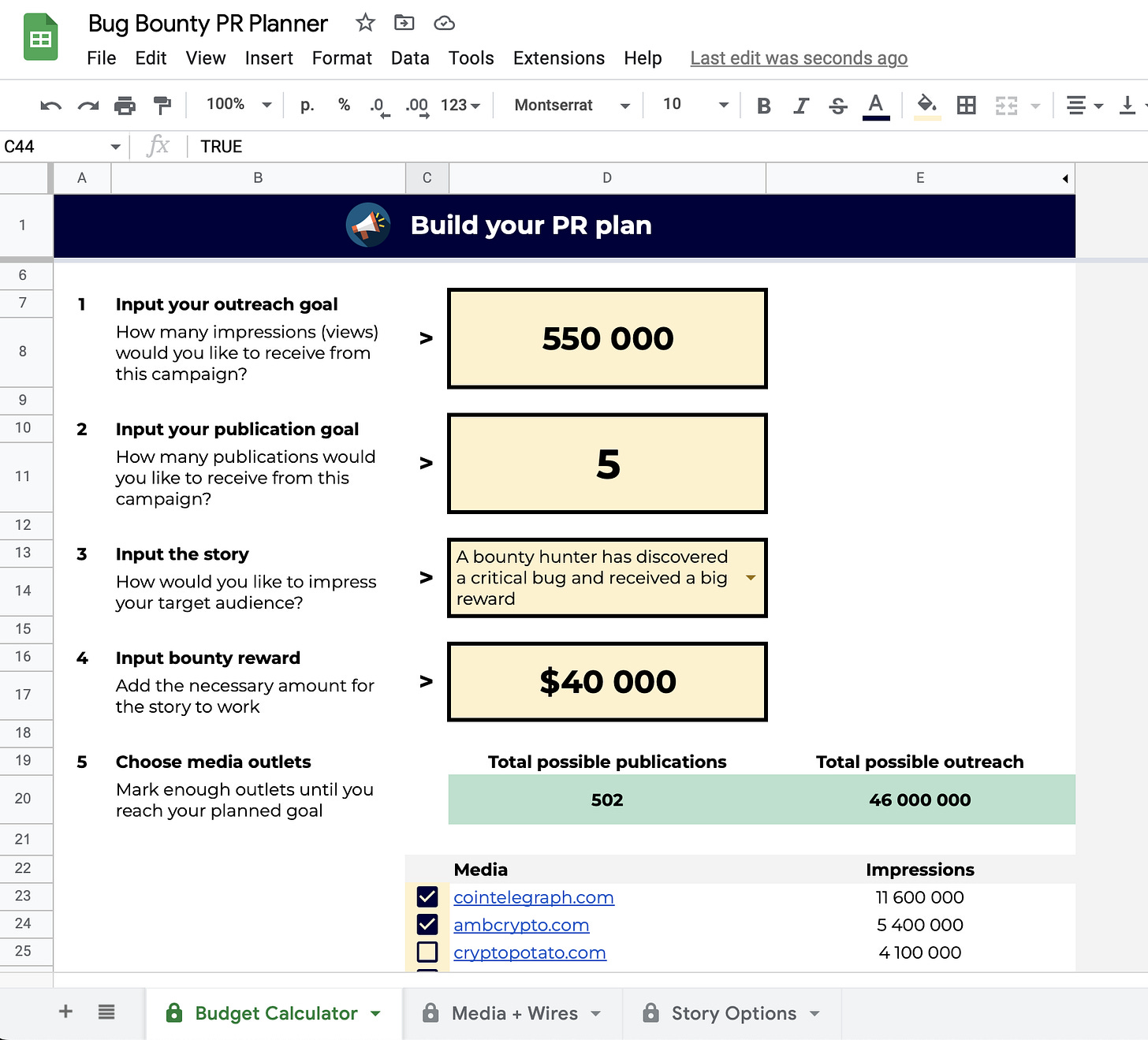
They also have a PR calculator. It’s a spreadsheet that calculates the budget according to set goals like impressions and publications:
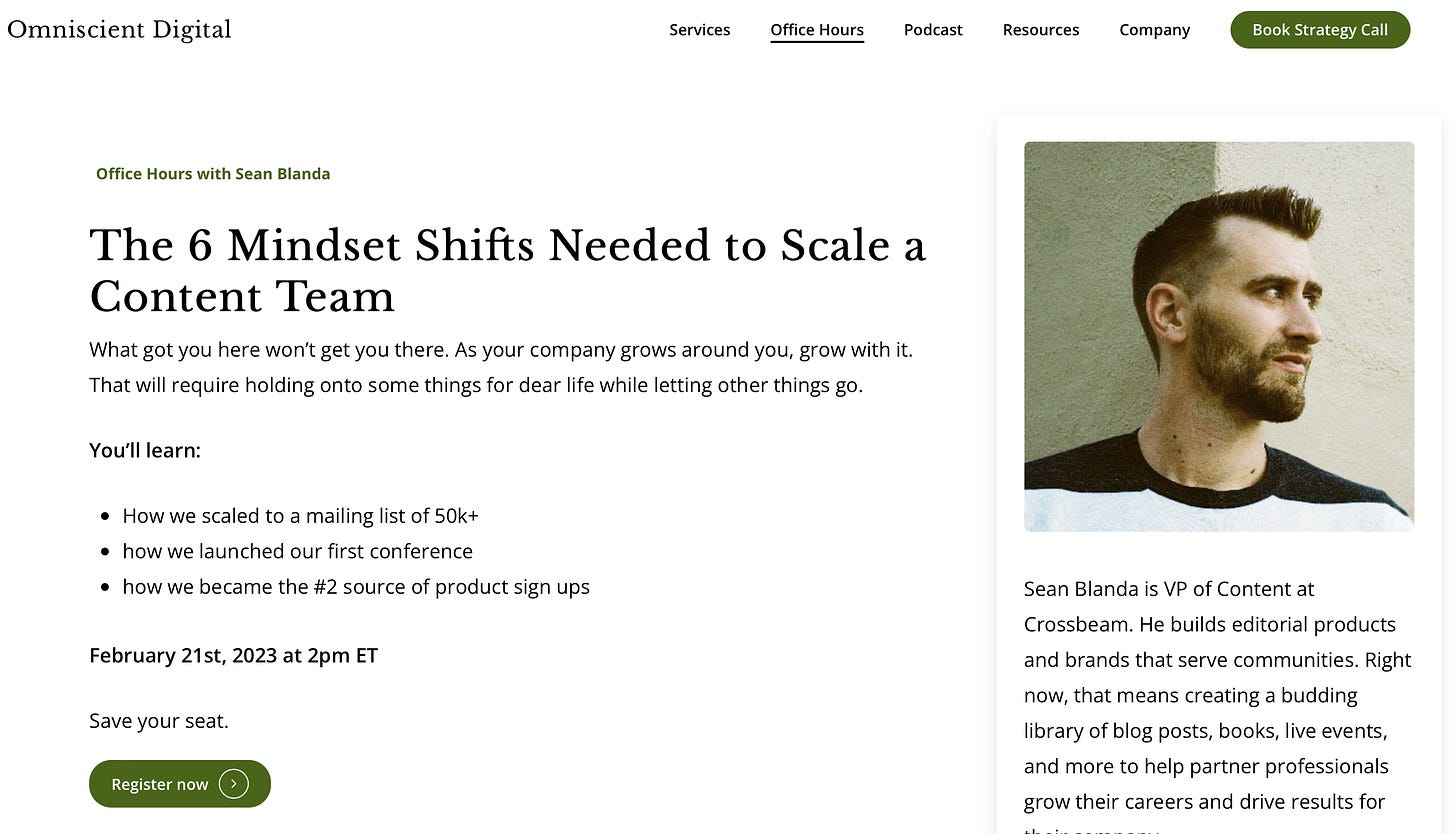
Omniscient Digital hosts webinars almost every week:
Usage-based Trials
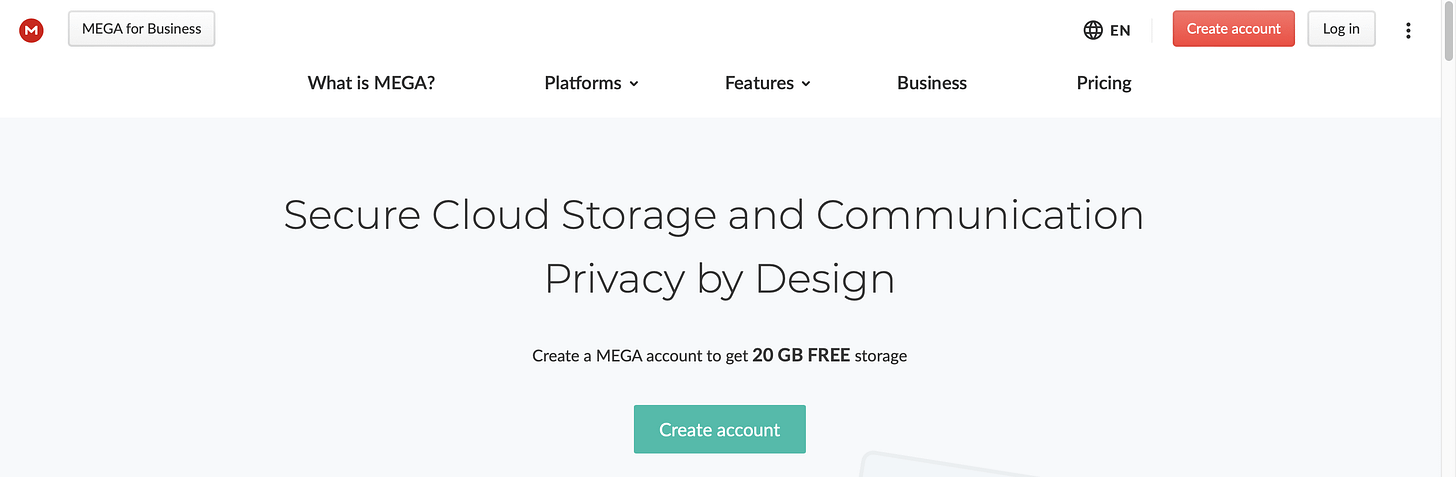
Mega (a successor to Megaupload!) has created a free usage ceiling for their cloud storage. If users like the product experience, they’ll likely upgrade to a paid plan once they’ll reach 20GB:
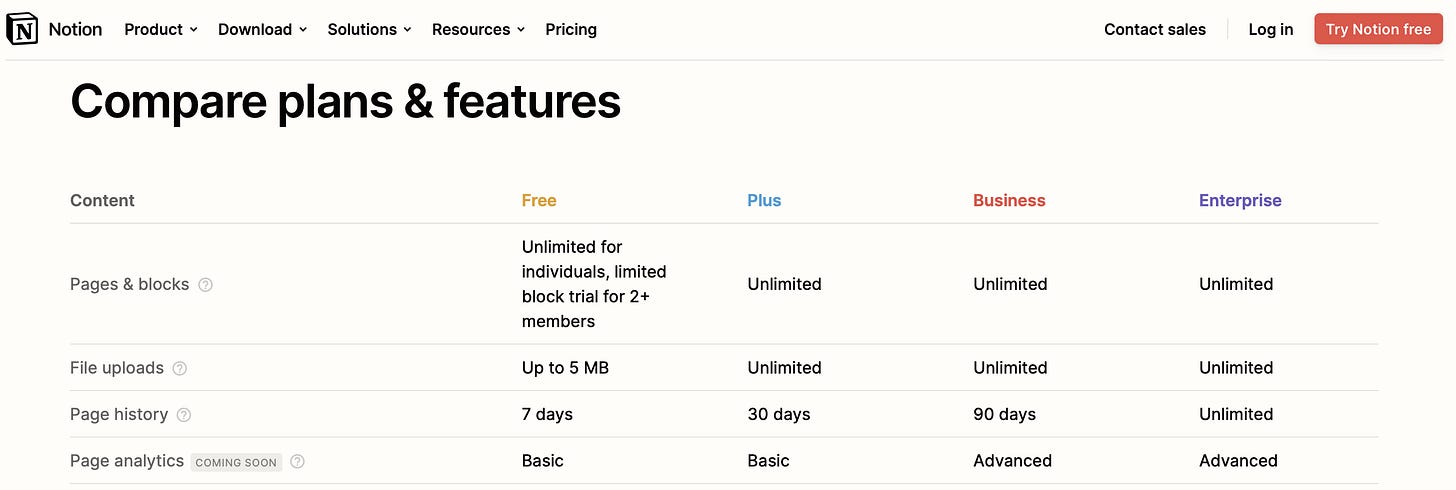
Notion’s free plan covers all basic features. The ceiling is set at a number of collaborators. When you use Notion for personal management, something seems off when you don't use it for work:
Ahrefs once had a paid 7-day trial for $7:

Audits & Consultations
Momentum offers a free marketing audit:

Wirtek consults on developing a software product:

How to Create a Microproduct for Your Business
How to Create a Microproduct for a Service Company
Identify the first stage of your main service. For example, most services begin with some sort of preparation step:
review
audit
planning
consultation
Now position this stage as a standalone microproduct and offer it to your new customers. Try to test free vs paid pricing to see how it impacts your main conversion.
How to Create a Microproduct for a Product Company
Research how much value each feature provides to your user
Identify the “cheapest” feature, the one with the low value
Make this feature a standalone product
Microproducts for SaaS are connected to trials. You can set up your microproduct in a way that would offer high-value features in exchange for a subscription or usage-based plan.
When setting up your trial, it’s also recommended to follow the practice of reverse trials. This is when users start with a time-limited trial and then become freemium users after the trial.